

What Victoria's Draft Solar Feed-In Tariff Cuts Mean for Solar Owners in 2025/26
Victoria’s Essential Services Commission (ESC) unveiled its draft decision on the minimum solar feed-in tariff rates for the 2025/26 period a couple of weeks ago, and it’s not good news for solar system owners.
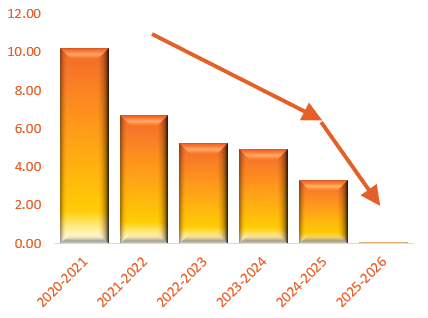
The proposed minimum flat feed-in tariff is 0.04c/kWh starting 1 July 2025, down from the current 3.3c/kWh in 2024–25. Just a few years ago it was 10.2c and feeding back energy was somewhat worthwhile.
The draft decision also proposes two time varying feed-in tariffs ranging from 0.0 to 7.5c/kWh. This is down from the current 2.8 to 7.6c/kWh
Although the Essential Services Commission sets the minimum feed-in tariffs, retailers will likely offer feed-in tariffs above the minimum amounts so it might pay to shop around.
The draft decision is open for consultation on Engage Victoria until 31 January, with a final decision on minimum feed-in tariffs to be published by 28 February 2025. If you are a solar owner, feel free to let them know what you think about the proposed rates.
It’s probably no surprise but solar in Victoria has boomed in recent years and with so much of it, there is little demand for energy during the day. Since 2019, the number of rooftop solar systems in Victoria has surged by 76%, from around 446,000 to 787,000, partly due to the state’s solar panel rebate program.
Unfortunately, no demand = no value. The wholesale price of electricity is often lower than what is being paid to solar system owners. That’s not likely to change unless everyone gets electric cars and starts charging them in the daytime!
Time Varying Rates for 2025/26
There are two options for time varying rates.
Time varying minimum rates | ||
|---|---|---|
Option 1 | ||
Overnight 10pm to 7am | Day Weekdays: 7am to 3pm, 9pm to 10pm | Early evening Weekdays: 3pm to 9pm |
| 7.52 c/kWh | 0.00 c/kWh | 5.85 c/kWh |
Option 2 | ||
Shoulder Every day: 9pm to 10am 2pm to 4pm | Off-peak Every day: 10am to 2pm | Peak Every day: 4pm to 9pm |
| 1.40c/kWh | 0.00c/kWh | 6.50c/kWh |
Impact of the 0c Feed-In Tariff
A 0c feed-in tariff would mean a solar system might take a couple of extra years to pay itself off compared to last year. The more of your own energy you consume, the less impact it will have. If you are using 100% of your own energy it would have zero impact but in reality you will be exporting back to the grid and it may cost $100 – $400+ a year depending on the size of your system and how much you use / export.
What Should Victorian Solar Owners Do?
Apart from engaging in the consultation (though it’s unlikely to lead to drastic changes), solar owners have other options, though they range in cost and feasibility.
Going Off-Grid: Some may consider going completely off-grid to avoid the feed-in tariff altogether. However, this is an expensive route, with off-grid systems costing tens of thousands of dollars and requiring ongoing maintenance, including a backup generator. If you are connected to the grid, then this is almost always a bad decision.
- Home Batteries: Another option is to invest in home batteries while staying connected to the grid. The financial viability of this depends on the household’s energy use. Home batteries can provide blackout protection and help maximize the use of self-generated solar power.
While there are no state or federal subsidies for batteries at this time, Solar Victoria offers interest-free loans, which could help reduce the upfront cost.
Water Heating: If you’re looking for a cheaper storage option, consider switching from a gas hot water system to an electric heat pump and running it during the day using your excess solar. Victoria also offers incentives for upgrading to heat pump hot water systems.
If you have an old school electric system, putting it on a timer to run during the day and possible replacing the heating element with a smaller one will suck up the excess solar.
- Time-Shifting Loads: Maximizing self-consumption is another strategy. The ESC suggests shifting energy usage to daylight hours when solar generation is at its peak. Things includes things like home appliances, pool and spas, hot water systems that can all be put on timers. Hopefully as a solar owner you’ve already done much of this.
Some solar owners may even choose to limit their system’s export to zero in protest. That means they are limiting their environmental impact of the system but that’s a personal decision.
Overall, with lower feed-in tariff rates, solar owners may need to reconsider their energy strategies, whether by adopting batteries, switching to off-grid systems, or focusing on maximizing self-consumption.


Comments are closed.